
How AI Is Transforming UX Research in B2B Tech: Real Applications, Real Challenges

We love to stay at the forefront of new tech. After a year of experimenting with various AI tools across our UX practice, one thing is clear: the reality of AI in UX is more nuanced than either the hype or the skepticism suggests.
When used thoughtfully, AI doesn’t replace UX research—it amplifies it. AI helps us work faster, go deeper, and uncover patterns we may have missed on our own. But the key to getting the best results is putting it in the hands of people who truly understand the space, the users, and the stakes.
Finding signal in the noise
To illustrate what a difference AI-driven UX research makes, here are a few recent examples.
Earlier this quarter, our team was optimizing the free trials and downloads user flow for a leading B2B tech company. During one of our collaborative working sessions, the client mentioned they had an extensive, but unanalyzed, user feedback survey related to their login and signup processes. Seeing the potential value in this data, we asked for the survey responses.
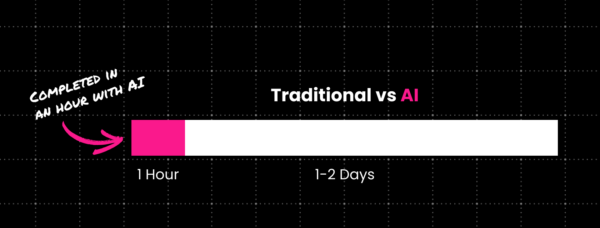
Using GenAI, we were able to rapidly ingest and parse hundreds of user feedback entries, immediately identifying and quantifying recurring patterns and friction points. We determined that overall, users were clearly dissatisfied (average rating: ~2 out of 5). We pinpointed the most critical user issues, including delayed email verification, slow loading times, and confusing Captcha interactions. We were also able to extract representative quotes that vividly illustrated these pain points. And we did all of this within minutes.
One insight that really stood out was the issue of verification emails expiring or never arriving. The problem was forcing users into frustrating loops, with many abandoning the signup process altogether. Highlighting this issue allowed us to swiftly prioritize design interventions to fix it, such as replacing unreliable email verification links with numeric verification codes, and directly informed adjustments to information architecture, interaction patterns, and user messaging.
In this case, AI’s true value wasn’t just its analysis speed. It was how quickly and confidently our team was able to uncover actionable insights—which let us invest more time and energy into targeted design strategies and solutions, rather than manual data processing.
When AI gets it right (after getting it wrong)
For another client, a cloud networking company, we used generative AI to map user journeys based on common B2B tech personas. In this case, it wasn’t a one-click solution. When we gave GenAI platforms the company website and the personas we were designing for, the first outputs were vague, misaligned, and often based on outdated assumptions. But they gave us a starting point.
At first, the AI confused cloud networking engineers with traditional network engineers, suggesting content and flows that didn’t fit the client’s cloud-native model. Plus, it also treated cloud architects as a completely separate persona when, in reality, they’re a more strategic subset of the same audience.
For executive-level users like CXOs, the AI focused too much on product features and not enough on what actually drives enterprise decisions—things like credibility, peer validation, and business value.
Even the way the AI organized content by stage needed work. Detailed technical documentation was placed too early in the journey, when those users were still looking for high-level value and proof points.
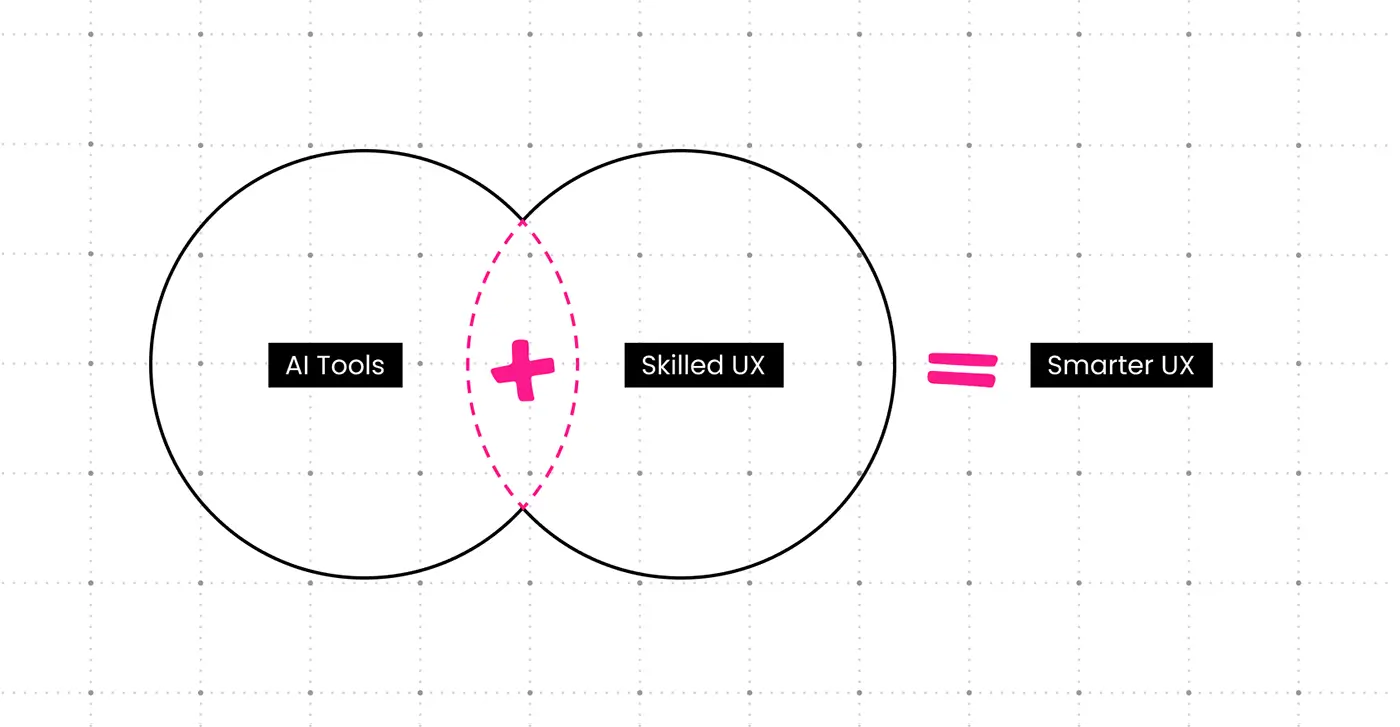
Getting useful, role-specific flows took multiple iterations—we had to reframe prompts, refine personas, and rethink its assumptions. While the AI gave us speed, the real value came from pairing it with strategy, critical thinking, and deep domain knowledge.
Better competitive analysis through pattern recognition
A recent banking-as-a-service client needed us to assess how competitors were structuring their sites for multiple persona types—looking at everything from navigation to conversion copy.
Instead of manually combing through every page and screenshot, we used AI to help analyze site structures, public docs, and product page language. The tool helped us spot macro patterns, like the use of nested nav for complex user roles, and micro-opportunities around differentiated content, SEO, and CTAs.
With AI assistance, we got this done in under 16 hours—roughly half the time a manual analysis would’ve taken. Accelerating the research on the front end freed us up to spend significantly more time on actual UX and messaging strategy.
The tools are only as good as the hands that use them
Making the most of AI means leaning into its strengths and recognizing its weaknesses. AI doesn’t know what your users care about. It can generate endless options—but it can’t tell you which one aligns with your business goals or differentiates your brand.
That’s where experience is essential.
Surfacing a list of insights is easy. Connecting those insights to business strategy requires expertise. The real advantage of AI in UX isn’t automation—it’s acceleration, clarity, and the confidence that only comes when the people using it have already done the work the hard way.
Looking ahead: Where we’re applying AI in UX
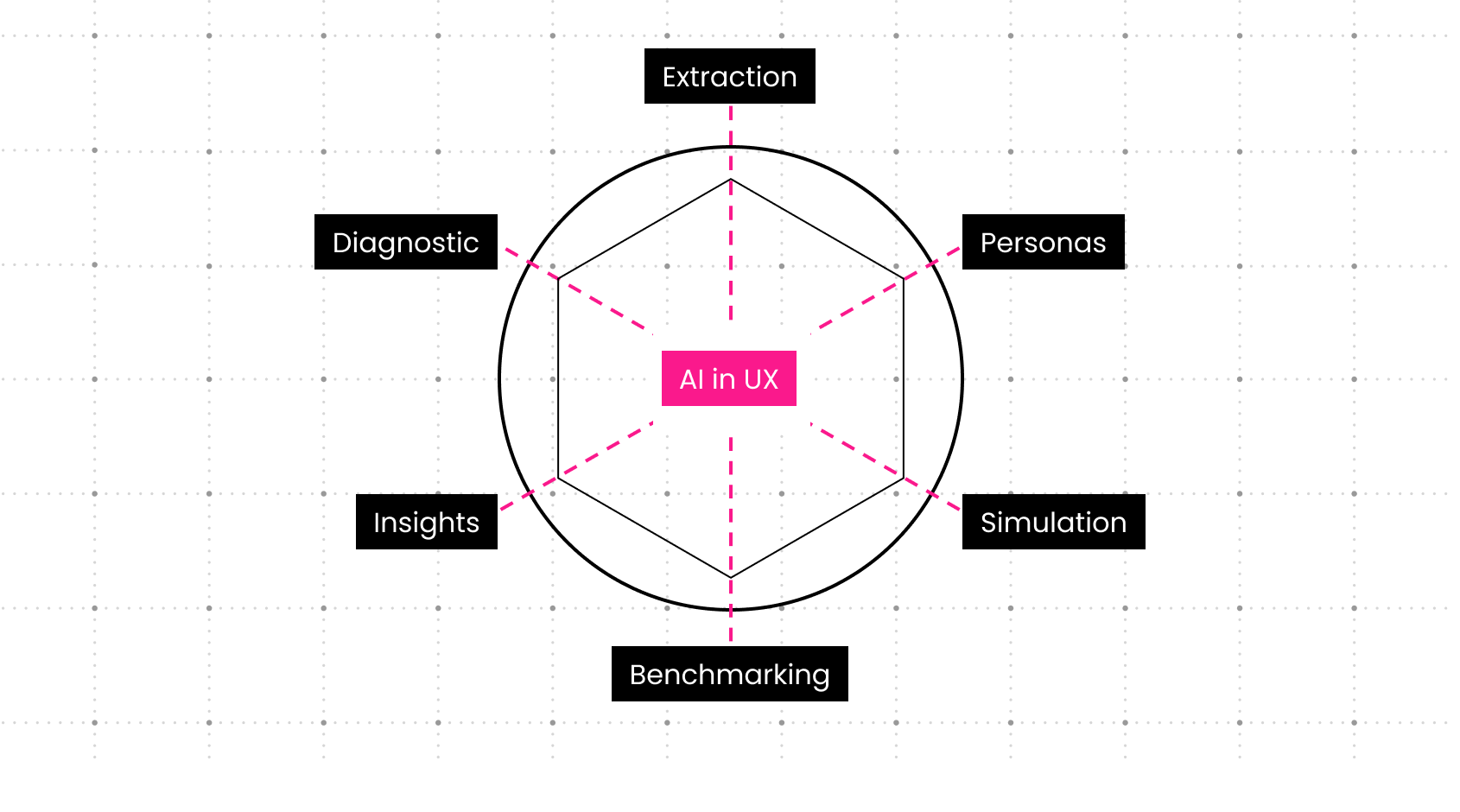
Here’s where we’re currently seeing the most value from AI in our work:
High-impact Use Cases
- Extraction: Parsing surveys, interviews, and chat logs to surface themes, quotes, and opportunities.
- Personas: Speeding up draft personas that we can then validate and refine using our deep B2B domain knowledge.
- Simulation: Modeling flows for niche industries where direct user access is limited.
- Benchmarking: Pattern recognition across competitor navigation, messaging, and conversion strategies.
- Insights: Spotting behavior trends in analytics data.
- Diagnostics: Using support tickets and chat logs to uncover recurring UX issues.
What we’re not using AI for
- Usability testing
- Stakeholder interviews
- Design work
These areas still require empathy, intuition, and real-world context—things AI doesn’t do well (yet).
Final thought
If you’re exploring how to bring AI into your UX process, start where you can validate. Survey analysis, competitive modeling, and data synthesis are low-risk, high-reward areas that can help you build confidence with these tools—while freeing up your team to focus on the work that truly moves the needle.
A Clear competitive advantage
AI adoption in UX isn’t a trend, it’s becoming table stakes. You can use it to process massive data sets, spot patterns, and simulate user behavior—all in a fraction of the time traditional research takes. That translates into faster persona creation, more intuitive journeys, and quicker decision-making. For fast-moving companies, it lets you check all the boxes: less time, lower cost, better insights.
To find out how we can use AI-driven UX research to accelerate and elevate digital experiences for your users, let’s talk. Move faster, iterate smarter, and stay ahead.
Get our latest insights in your inbox

Only 4 in 10 Fortune 500 Tech Brands Nail Their Homepage. Key Insights From Our 2025 Report
By Steve Ohanians on November 17, 2025
Read more
Future-Proofing B2B Websites for 2026: The Dev Team Talks
By Connor Bourke on November 10, 2025
Read more
What That “Cheap” Website Is Really Costing You
By Steve Ohanians on September 1, 2025
Read more